
The Camera Monitor System, abbreviated as CMS, replaces conventional optical rear‑view mirrors with a combination of cameras and in‑vehicle displays. CMS reduces aerodynamic drag, extends driving range, eliminates vision blind spots and improves driving safety.
To secure adequate field‑of‑view, conventional rear‑view mirrors are generally large‑sized. Their outward‑protruding profile generates substantial aerodynamic drag and wind noise at high vehicle speeds. Wind‑tunnel testing indicates conventional mirror shapes contribute roughly 2%‑5% to the overall vehicle drag coefficient.
The mirror surface of traditional rear‑view mirrors is fixed. Driver vision forms blind spots beyond approximately 30° outward from the rear doors, creating high risks of collisions with pedestrians, bicycles or other small objects within these blind zones.
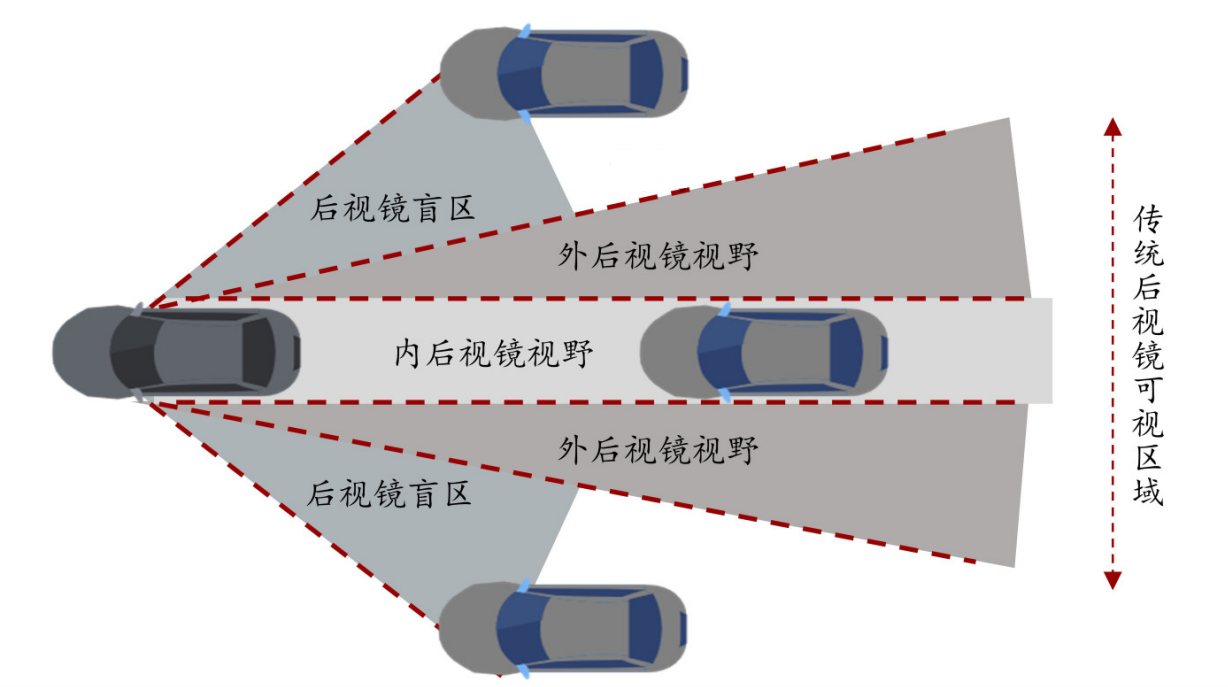
(Figure: Blind Spots of Conventional Rear‑view Mirrors)
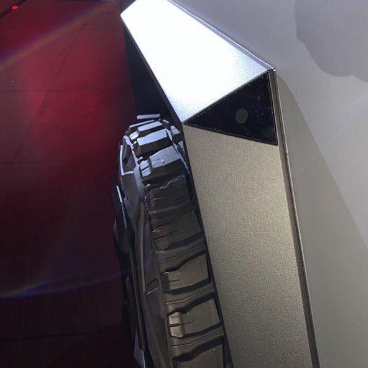
Tesla Cybertruck pickup employs two camera‑based exterior mirror units instead of conventional mirrors. Its compact form factor delivers significant drag reduction.
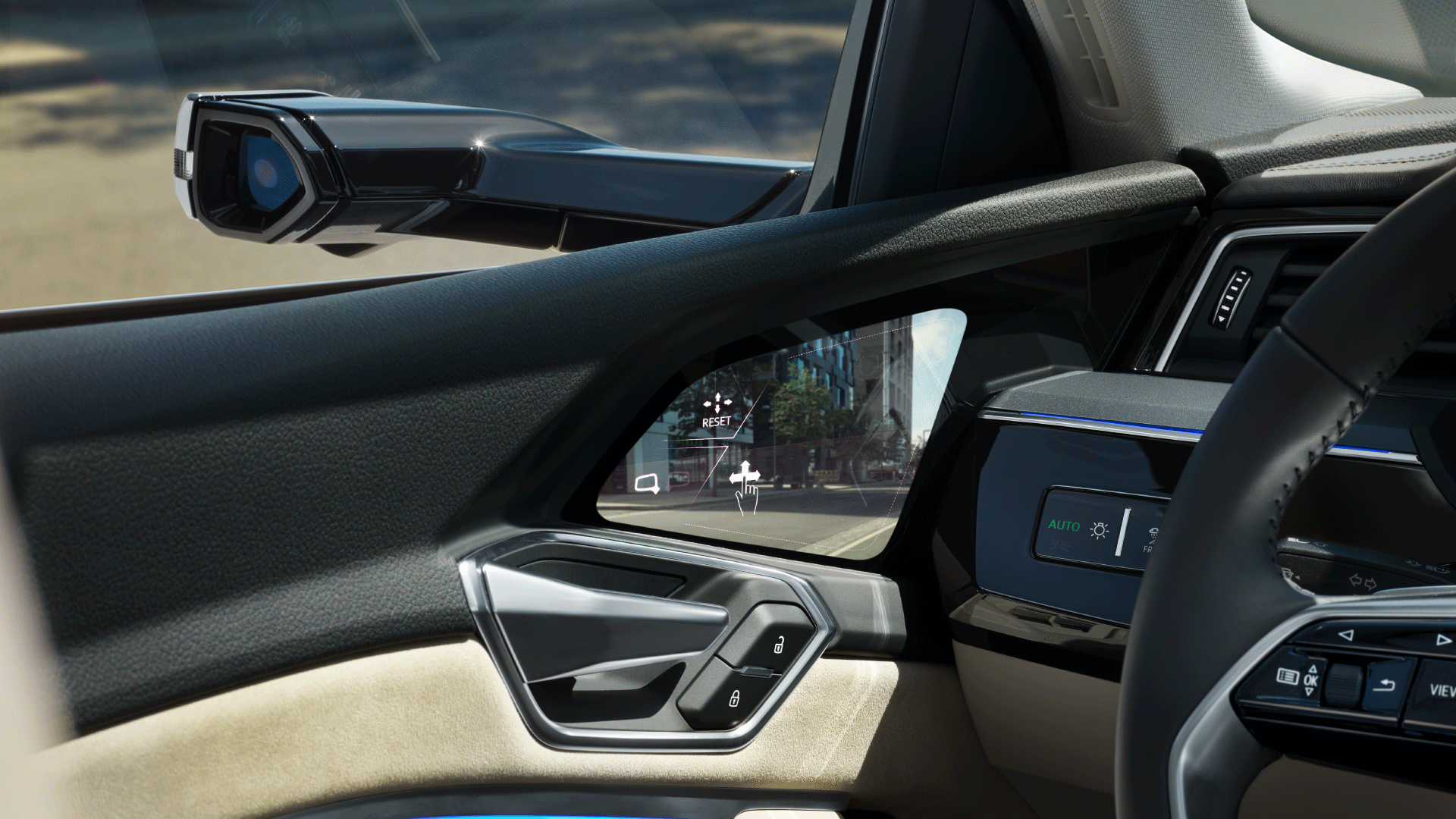
Audi e‑Tron adopts exterior CMS electronic mirrors. Two 7‑inch, 1280×1080 OLED displays are fitted below the driver and passenger side windows. Drivers are allowed to zoom in or out the on‑screen view. With nearly zero in‑vehicle‑to‑outside viewing blind spots, its effective field‑of‑view reaches roughly three times that of traditional mirrors.
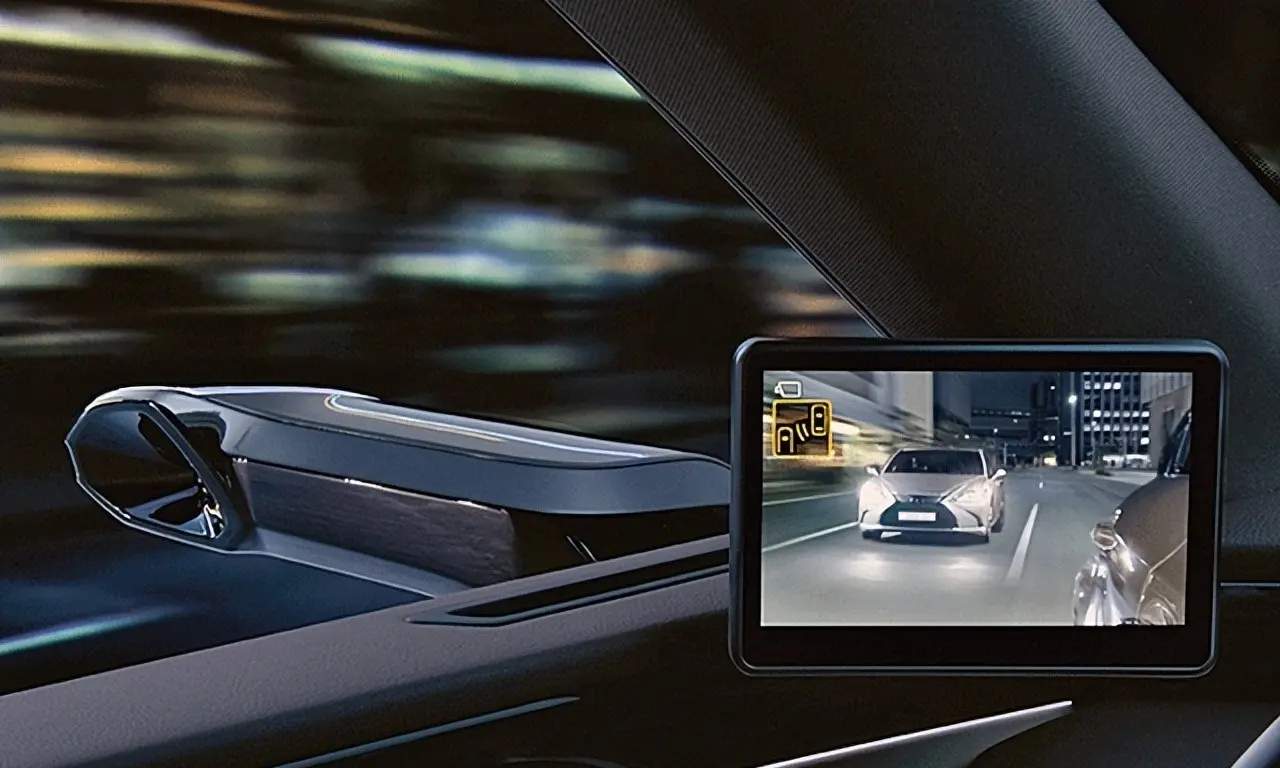
Under poor weather, low‑light or night‑time driving conditions, CMS maintains good visibility with anti‑glare performance for enhanced driving safety. On the Lexus ES exterior CMS system, drivers can toggle viewing angles among standard, wide‑angle and telephoto modes via physical buttons.
When vehicles advance to L3+‑level autonomous driving, exterior CMS captures surrounding imagery to support environmental perception and analysis. Accelerated intelligent transformation for new‑energy vehicles keeps raising perception requirements for autonomous driving, which is poised to drive sustained market growth for exterior CMS.
Exterior CMS poses extremely high design challenges. Its technical complexity far exceeds backup rear‑view cameras, surround‑view cameras or streaming‑media ADAS cameras.
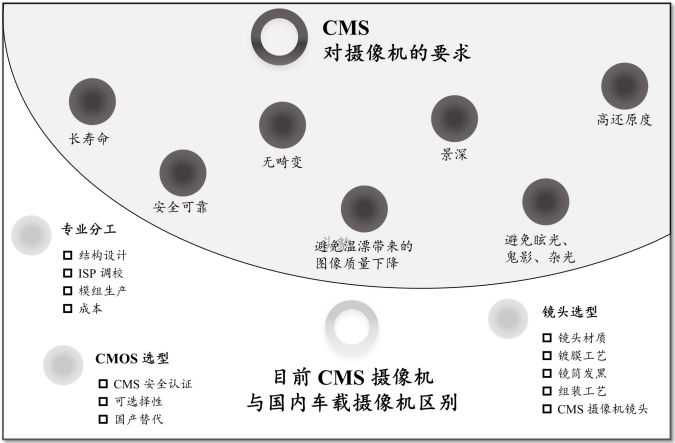
(Figure: CMS Requirements for Cameras)
CMS is a Safety‑Critical Automotive Component, Which Determines Its High Design Complexity
CMS cameras are mounted on vehicle exteriors; they must support waterproof sealing, wide operating temperature range, anti‑aging and impact‑resistance.
CMS camera assemblies must resist water splashing and dirt accumulation, calling for high‑performance lens coating.
CMS video feeds serve as visual references for driver decision‑making, so strict requirements apply for image fidelity, color saturation, contrast and sharpness.
CMS system failure directly compromises driving safety. As an automotive safety‑critical component, it demands long service life and high reliability.
CMS product design must address multiple operating conditions: high‑dynamic‑range / highlight suppression under high‑contrast lighting; low‑illumination performance & thermal noise suppression in darkness; anti‑glare and backlight rejection under intense sunlight; water‑repellent & heating functions for rain‑snow scenarios; contamination resistance for dusty/sandy environments. CMS R&D and production span multiple disciplines with demanding cross‑industry specifications. Its design requirements and functional test criteria outperform those for general consumer electronics.
A typical CMS system consists of cameras, a system controller and display panels.
Cameras: Convert captured scenes into digital signals and transmit them to the system controller, delivering high‑quality real‑time road imagery for drivers.
System Controller: Frequently integrated together with displays. It communicates with other automotive ECUs over CAN bus to realize data sharing and coordination across vehicle control units.
Displays: Support adjustable image output, view switching and configurable side‑mirror display regions.
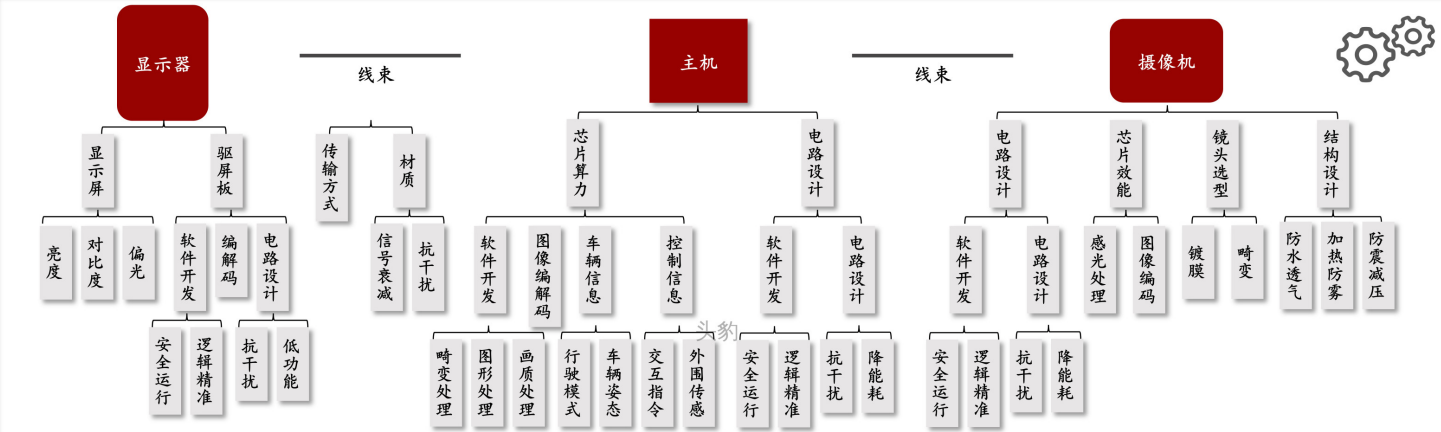
CMS System Architecture & Functional Requirements
Key chips: FPGA, ASIC, SerDes deserializers and video codec units
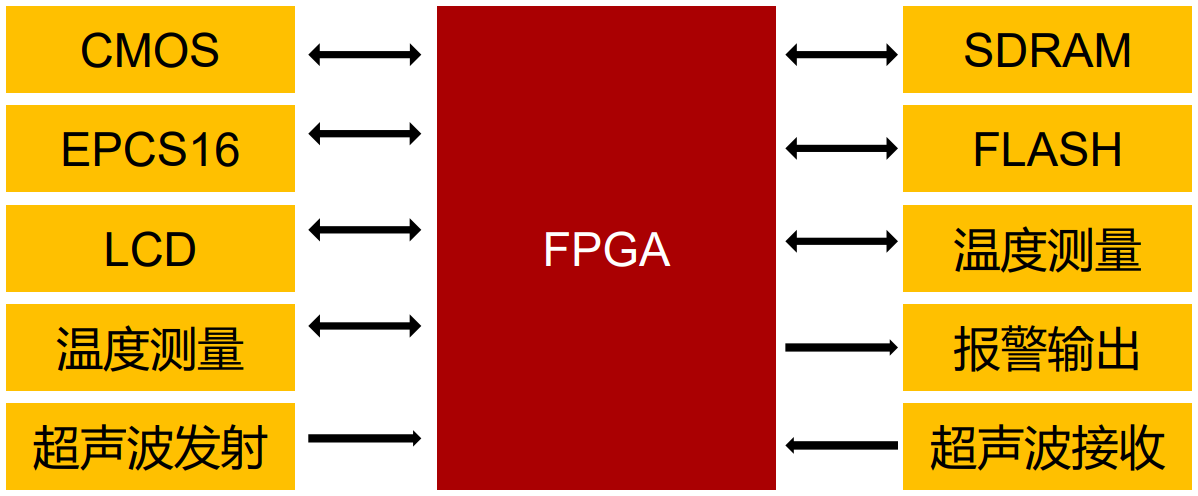
(Block Diagram: Pure‑Display CMS Architecture with FPGA)
Below is the typical architecture for the display‑plus‑ADAS CMS deployed on Lexus vehicles.
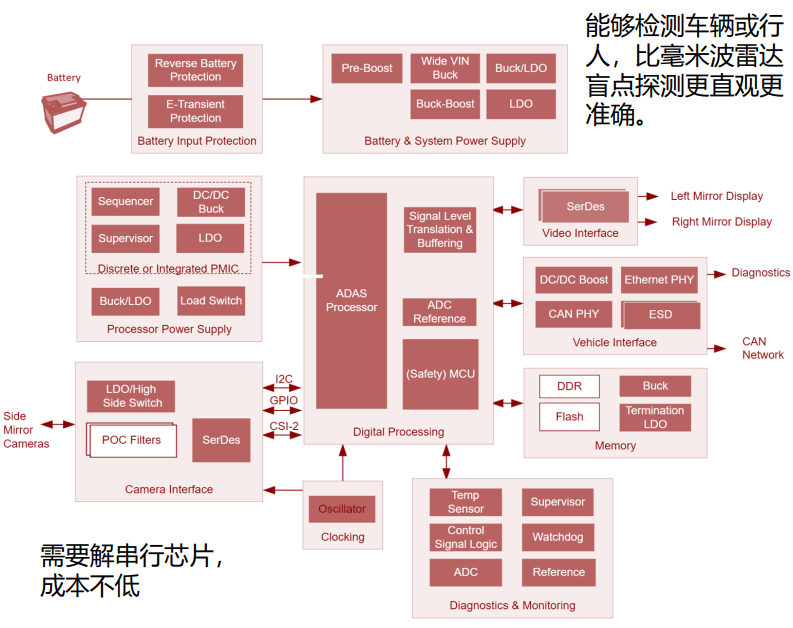
Reference Sources:
CMS Electronic Mirrors: Meeting the Future · Zheshang Securities Technology Research
CMS Policies Approaching Implementation, Dawn for Industry Development · LeadLeo Research Institute
 WeChat